Which format, and why it matters
Six packaging families, what each is actually for, and the mistakes that cost money.
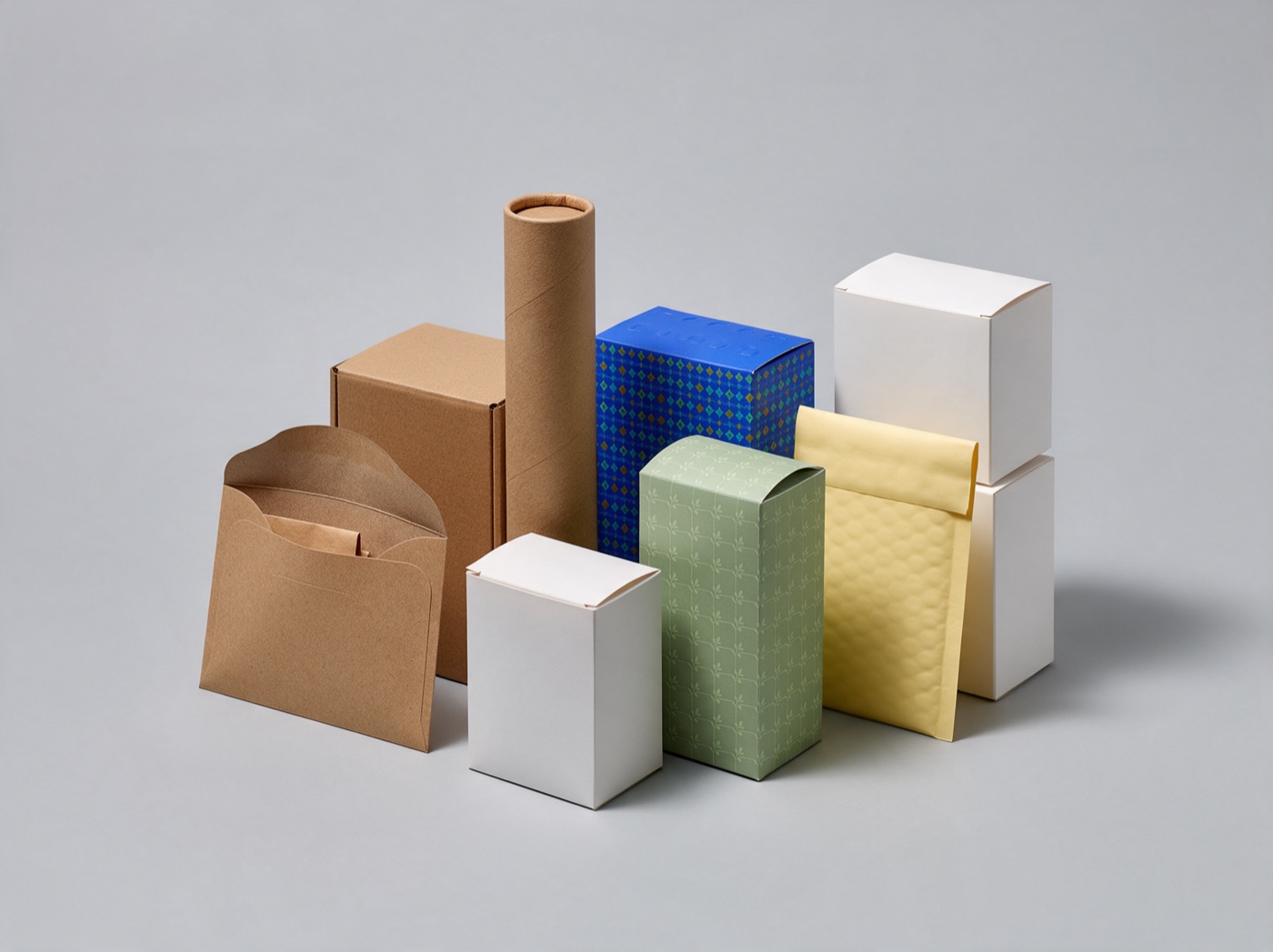
Boxes versus bags
A mailing bag is cheaper to buy, cheaper to post and far smaller to store, but offers almost no crush protection. Anything rigid, fragile or awkwardly shaped wants a box. Soft goods rarely do.
Fitting the box to the item
An oversized box costs more in postage, needs more void fill, and is more likely to be damaged because contents move. Measuring your most common items and choosing two or three sizes usually beats one universal size.
When padding earns its place
Padded envelopes suit small items that need protection but not structure: jewellery, cosmetics, small electronics. They post at letter or small-parcel rates where a box would not.
Void fill is not optional
Empty space inside a box is where damage happens. Paper fill and shred are recyclable and compress flat in storage, which matters if you are already short of room.
How format affects reordering
Consumables like tape and void fill are the ones people run out of, because usage is steady but invisible. They benefit most from automatic replenishment, precisely because nobody thinks to check them.